
Top Brands of Plastic Water Storage Tanks and Why They’re Popular
Water storage is essential for agriculture, homes, commercial sites, and emergency preparedness. With climate change and ongoing wildfire issues, in some states, it is even required to have water stored to obtain permits.
One of the most popular types of water storage tanks is polyethylene (also known as poly or “poly water tanks”). These tanks stand out for their durability, cost, and flexibility.
In this article, we’ll highlight the best-selling Bushman and Snyder poly water tank models and then dive into why these tanks and poly tanks in general have surged in popularity.
We are also working on a “Buyers Guide” that will further assist anyone in the market with helpful hints in getting the best tank for the best value.
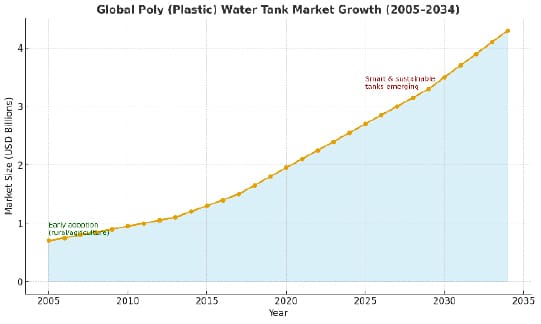
Increased demand is fueling continued industry growth
The global plastic / plastic water storage tank market has grown steadily. Some forecasts project the market reaching USD ~ 2.4 billion by 2030 with a compound annual growth rate (CAGR) of ~4.4 % in the medium term. PR Newswire
Another source estimates the polyethylene water tank segment specifically will grow from USD 1.2 billion in 2024 to USD 2.6 billion by 2034 (CAGR ~7.8 %) Reports and Data.
The broader storage tank/storage systems markets (which include many applications beyond just water) show even stronger growth: e.g., a global storage tank market report estimates growth of ~6.25 % CAGR 2024–2030 to USD 37.98 billion by 2030
What Makes Snyder & Bushman Tanks So Popular?
Before discussing specific models, it’s worth taking a step back to understand what defines a best-selling poly water tank in our opinion. Here are the key attributes that both Snyder and Bushman deliver, which is why we sell these tanks exclusively and have become one of their largest dealers in the U.S.
- Rotationally molded seamless construction — no welded seams, which reduces leak risk
- UV stabilization & light blocking — critical to reduce algae growth
- Compliance with potable water / FDA / NSF standards — many tanks are rated for drinking water
- Range of sizes / modular options — to serve not only small domestic needs but also much larger tanks for industrial and commercial.
- Strong manufacturing networks — easy access to ship from multiple locations or even to provide pick up options to save freight costs.
- Warranty & brand reputation — buyers trust proven brands
- Flexibility for fittings, customization & add-ons – We can accommodate any special requests
- Good cost vs performance — poly (HDPE) is relatively economical, durable, and corrosion-resistant
The Top-selling Snyder & Bushman Tank Models
Here are a few of the most popular poly water tanks that are widely available and in demand. Each listing includes key specs and selling features.
Snyder 10,000‑Gallon Vertical Water Storage Tank
142” in diameter and 169” High
- One of Snyder’s flagship large tanks.
- Ideal for community-level storage, large rainwater systems, or agricultural irrigation.
- Built from FDA-compliant resin, seamless, UV-stabilized.
- Its large capacity makes it a workhorse for customers needing large quantities available.

Snyder 2,500‑Gallon Vertical Water Storage Tank
96“ in diameter and 90” high (other sizes available)
- A common mid-sized tank.
- Good “sweet spot” for mid-to-large domestic and light commercial applications.
- Easier to ship / install than 10,000-gallon, yet handles significant volume.

Snyder 4,100‑Gallon Vertical Water Tank
102” in diameter and 130” high
- A step between 2,500 and 10,000 sizes.
- Gives flexibility for systems that have moderate but substantial water needs.
- Its middle-ground status often makes it a “go-to” for scaling projects.

Snyder 1,100‑Gallon Vertical Dome Tank
84” in diameter and 56” high
- For moderately sized residential or small commercial systems.
- Dome-top design helps structural integrity, runoff, and reduces contamination.

Snyder 100‑Gallon Vertical Water Storage Tank
30” in diameter and 42” high
- Entry-level, compact, for small systems or emergency backup water.
- Useful in small homes, cabins, or as a “starter” tank.

Bushman 500‑Gallon Vertical Water Tank
48” in diameter and 73” high
- One of Bushman’s most shipped sizes.
- Good size for residential or small agricultural use.
- Bushman ensures it’s made from BPA-free rotationally molded polyethylene, with UV inhibitors, and limited light penetration to curb algae

Bushman 2,500‑Gallon Vertical Water Tank
102” in diameter and 80” high
- Equivalent in capacity to the Snyder 2,500 but offers the Bushman design and features.
- Bushman includes “flats” at top & bottom to allow flexible installation of fittings.

Bushman 530‑Gallon Slimline Tank
25” wide, 78” high and 86” long
- A “slimline” or narrow-footprint tank.
- Useful when space is constrained — e.g., against a wall, in tight yards.
- Bushman’s slimline line is explicitly marketed to fit where standard round tanks won’t.

Why These Tanks Sell So Well (What Makes Them so in demand)
There are dozens of reasons why consumers buy the Snyder and Bushman lines of poly tanks; here are just a few:
1. Size Range + Scalability
Many buyers prefer to pick a “comfortable” range rather than go straight to extremes. Tanks with capacities of 2,500 gallons, 1,100 gallons, and 500 gallons are frequently purchased because they suit many use cases without being overkill. Offering a smooth scaling ladder (65 → 500 → 1,100 → 2,500 → 10,000, etc.) allows users to “upgrade” as their water needs grow.
2. Brand Trust & Support
Snyder and Bushman have built reputations over decades. Dealers and installers are familiar with their specs, fittings, warranties, and handling details. That familiarity gives confidence to buyers. Warranty support, local distributors, and parts availability help maintain momentum for repeated sales.
3. Certifications & Potable Water Use
Many buyers need potable water storage or at least options that could be used for drinking water. Snyder’s tanks are marketed using FDA-compliant resin and are suitable for storing potable water. Bushman offers NSF/ANSI 61 certified models. That versatility boosts demand: the same tank can serve irrigation now and potable needs later (or vice versa).
4. Durability & Longevity
Polyethylene tanks, produced through rotational molding and UV stabilization, resist cracking, warping, and fading. Their lack of seams reduces weak points. Both brands emphasize long life even under the sun and exposed to the weather. Bushman, for example, incorporates UV inhibitors and designs walls to limit light penetration, thereby reducing algae growth.
5. Customization & Flexibility
Buyers often want to place inlets, outlets, overflow, manways, sensors, and other components in custom locations. Snyder molds in tie-down slots and can deliver tanks with special fitting placements. Bushman provides “flats” (flat surfaces) on domes and bases where users can add bulkheads, gauges, etc.
This flexibility encourages users to standardize on these brands rather than generic tanks with limited modifiability.
6. Installation & Handling
Tanks that are easier to transport, lift, anchor, and install tend to be more competitive. Many of these models are designed with lifting lugs, tie-down slots, molded bottoms that help level, and manageable sub-weights for trucks or cranes.
7. Optimized Footprint Options
While conventional round tanks fit many sites, sometimes space is tight (urban lots, narrow yards). Bushman’s slimline series addresses that gap.
That ability to offer both “bulk” and “space-constrained” designs increases market reach.
8. Price Point / Value Balance
While extremely low-cost tanks exist, buyers willing to invest slightly more for brand, quality, support, and warranty often settle on these mid-premium models. That balance, “not the cheapest, but best value,” drives consistent sales.
9. Marketing & Dealer Channel Presence
Because Snyder and Bushman proactively support dealer networks, spec distributions, marketing collateral, and parts support, they maintain a presence in catalogs and dealer offers. Many buyers see these names first. Over time, this boosts their being chosen by default.
10. Legacy & Word Of Mouth
When one neighbor sees a reliable tank in operation for years, they often ask, “What model is that?” Word-of-mouth for lasting performance keeps people ordering the same models. Once a specific capacity and model become a known “workhorse,” they stay in rotation.
Tips for Buyers & Installers: What to Watch Out For
Even with popular models, buyers should watch these key points to avoid disappointments:
- Foundation & Base Prep
Large tanks require flat, fully supported bases (such as compacted aggregate or a concrete pad). Even a slight unevenness can cause stress. - Venting & Pressure Relief
Most poly water tanks are designed for use at atmospheric pressure. You need to size vents or manifold accordingly to avoid pressure/vacuum damage. - Avoid Light Penetration
Tanks should be opaque or UV-stabilized to block light and prevent algae growth. - Correct Fitting Placement
Pre-plan the locations of bulkheads, inlets, outlets, and sensors. Changing later is harder. - Overflows & Emergency Spill Paths
Provide safe overflow paths to prevent excess water from causing erosion or damaging structures. - Anchoring / Tie-Downs
In areas prone to wind, seismic activity, or flooding, proper anchoring via molded tie-downs or base hardware is essential. - Access & Maintenance
Ensure you can access lids, manways, interior cleaning, sensors, etc. Oversized or obstructed installations reduce usability. - Warranty Conditions
Always install according to the manufacturer’s guidelines (base, venting, and fittings) to avoid voiding your warranty. Bushman’s 3-year warranty specifically calls out adherence to instructions. - Comparative Cost of Shipping & Handling
Tanks are bulky; shipping freight, crane lifts, and handling can be a significant hidden cost. A “popular” model that’s too expensive to ship may not be the right choice. We are happy to discuss the least expensive shipping options.
Use Cases & Popularity Patterns by Sector
At National Tank, we have a large and diverse client base across the country. We proudly serve clients in various situations, with some so pleased that they take the time to leave a kind review on Google. OK, many customers have provided 5-star reviews. Here are just a few of the applications and favorites that homeowners and businesses alike have found useful.
Residential / Rainwater Harvesting
- Smaller Snyder tanks (65, 1,100, 2,500) and Bushman vertical or slimline models are very common in rainwater systems.
- Bushman’s rain-harvesting variants include strainer baskets, overflow, and dual drains preinstalled.
Rural Homes / Off-Grid
- A 2,500 or 4,100 Snyder tank paired with pumps becomes a staple.
- Flexibility to upgrade, add sensors, or integrate UV/iRO systems makes these tank sizes enduring.
Fire Protection / Irrigation
- Larger tanks (10,000+ gallons) are often reserved for fire suppression or large irrigated plots.
- Brand reliability is critical because failure means downtime or a higher risk.
Agriculture / Livestock
- Tanks that survive equipment, exposure, and reuse are essential.
- Snyder’s or Bushman’s UV-protected, thick-wall designs offer durability in agricultural settings.
Commercial / Industrial
- Large-capacity Snyder tanks (e.g., 10,000 gallons) or custom-known quantities are used for process water, bulk storage, or as buffer vessels.
- Buyers look for support, certifications, ease of integration, and longevity.
Conclusion
In short, the best-selling poly water tanks succeed because they strike a balance between affordability, durability, adaptability, and ease of use. When shopping for a poly tank to serve a specific purpose at your home or office, ensure the dealer offers only the best tanks, maintains a good supply on hand and ready to ship, and can answer all your questions with accuracy and confidence.
Our poly tank specialists are the best in the industry. We look forward to hearing from you and solving your water storage needs.